
oil system modifications
The
Yamaha XS650
oil system utilises what is termed a wet sump design. This is when the
oil for lubrication is retained within the confines of the crankcases.
In the past, older designs used a dry sump design where the oil is kept
in a separate oil tank. Bikes like Harleys, Triumphs, and most other
British bikes had a dry sump design.
The wet sump design has some good features and some negative features
to it. On a positive note, it negates the requirement for a separate
oil tank, oil lines, and a return rotor for the oil pump. The not so
clever features are the oil is kept within the confines of hot
crankcases, so cooling is not as good as a dry sump design and the oil
level is usually relatively high in the cases.
On an XS650 the crankshaft runs in a depth of oil, and depending what
the level is will dictate how much depth of oil it runs in.
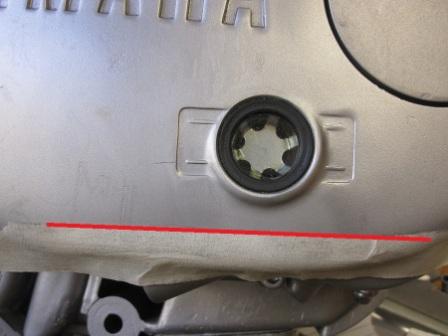
To check exactly how much oil the crank is running in, I built up a
bottom crankcase, with just the crank and rods assembled in the cases.
I then filled the engine up with oil until the oil just touched the
bottom of the flywheels. In the picture above the red line is the oil
level just touching the very lower part of the circular
flywheels.
So if the engine is filled with oil to the lower mark on the sight
window, the crank will already be running in around 18-20mm of oil, by
the time the oil level is on the high mark the crank is around 36-37mm
deep in oil.
So what, I hear you say. Well there is a downside to running your crank
in this much oil. Imagine if you will, running down a beach where the
sand is just covered in an inch or two of water, no problem at all.
However if the water on the beach was knee high, it would entail a
whole lot of effort to keep running. The same is true of your crank
running deep in oil, a lot more effort to move the crank through the
oil. When the crank is turned at speed through the oil it causes
foaming, excessive oil on the flywheels is also flung up the bore.
Whilst a bore needs oil for lubrication, too much will overwhelm the
oil control ring, causing slightly oily spark plugs and oil traces in
the combustion chamber.
To keep as much oil volume as possible, and at the same time to reduce
the actual oil level, two different methods are utilised . The first is to
convert the often redundant starter motor into a reservoir; from a
wholly original idea Smedspeed/Guilford Motorsport Fabrications bring
you the enlarged oil reservoir conversion.

Smedspeed now offer a 4 brush starter motor conversion. Along with some other minor mods, the starter can now be modified to work so well it will turn over an 880cc engine with 10.5: compression, this is available on an exchange basis.
The
second of the
oil level reduction methods is the addition of a 20mm spacer between
the sump plate and the engine. The spacer allows for a further 200cc of
additional oil.
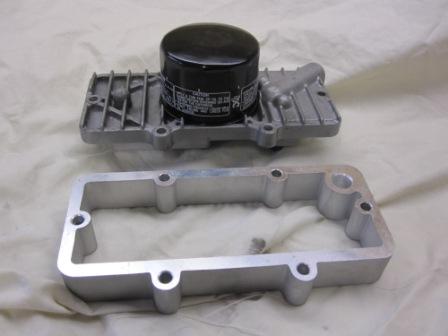
A total of an extra 615cc of oil is available through adding these two
“reservoirs”, the oil level can then be confidently
set
with a measuring jug at 3 litres, the static oil level will be just
beneath the flywheels. (I have noticed that the oil level window and
dipstick do not always show the same oil level; it appears that the oil
level sight glass is higher than the dip stick reading, not by much
though).
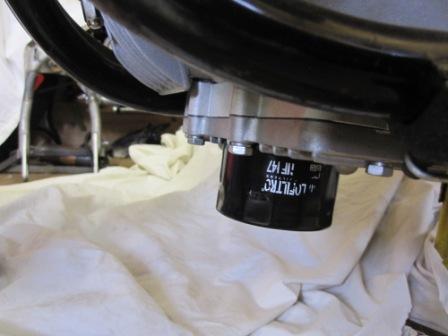
The sump spacer doesn’t down extend too far either. Above is
an
880cc with a Smedspeed sump filter and the spacer. It can be seen it
doesn’t hang down a long way, it’s not much below
the
centre- stand brackets in actuality. However if you live in an area
where
you do a lot of off-roading, it might not be a good idea.
One of our competitors in sidecar road race ran his XS650 on his dyno
with the oil level well onto the top of the dipstick/inspection window
mark. His engine was flat and unresponsive. He realised quickly what
had happened and lowered the level right down, so the crank was
completely free of oil (under the lower dipstick mark) and picked up 4
hp !!!
All the modern Japanese engines still utilise a wet sump, BUT now they
put all the components much higher in the cases and the oil much lower,
every little bit of hp gain counts.
Contact me for more details